Potential Solutions to Conflict in Greater Tonj

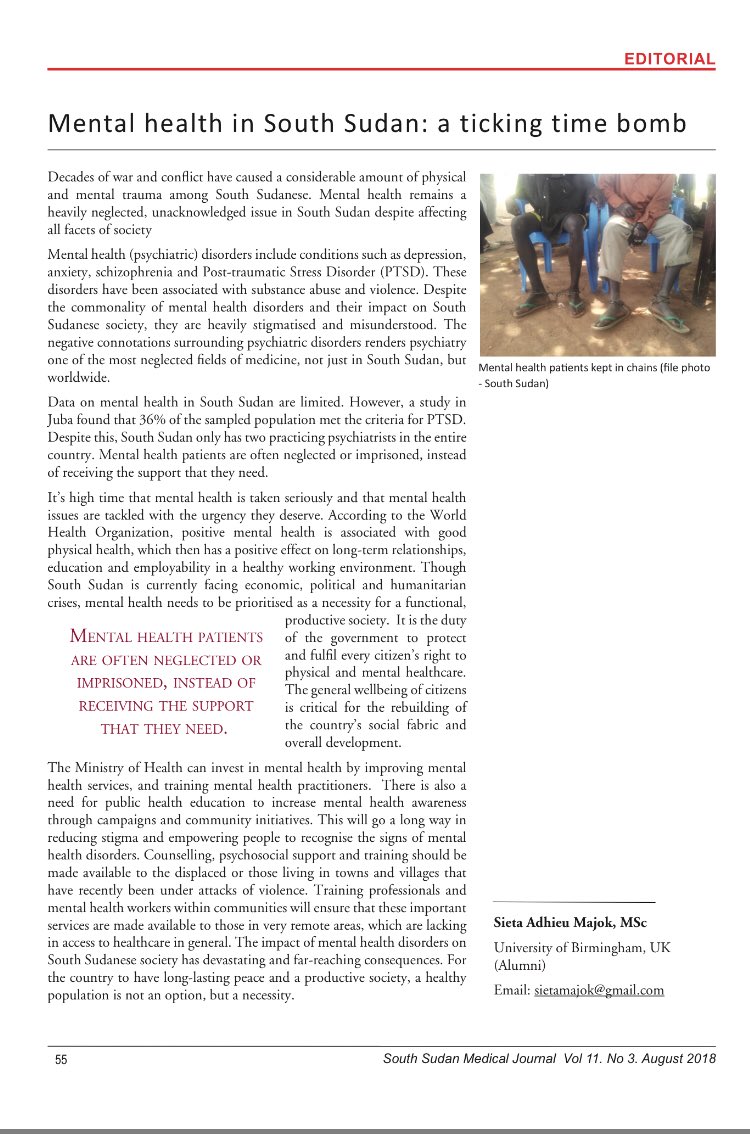
Cover of the Warrap State Green Book.

It is unsurprising that Greater Tonj is experiencing continued cycles of armed conflict. This is an issue that has always been dear to me, and I think I have tried in my own capacity to participate in solutions. This ranges from being part of the Thiik Community Conference in 2017, to the Greater Tonj Peace Conference held in Juba in 2021. The famous (or for some of you, infamous) ‘Governor’s Green Book,’ was developed out of the latter conference.

Numerous governors have come into Tonj, and tried and failed. This is not necessarily a reflection of their ability or commitment, but rather that the issue of Greater Tonj and armed conflict is so deeply rooted and multifaceted, that it requires a multi-pronged, long-term strategy. I am by no means an expert, but I am a highly concerned daughter of Tonj East who is married to Tonj North; Tonj is the only true home that I have. Here are my suggestions for a multi-pronged strategy, based on the work I have done, readings I have undertaken, and observations I have made;

  • Legal Accountability: Anyone found arming civilians, inciting violence or participating in armed violence needs to be held legally accountable. Strengthening the judicial system to ensure fair and transparent prosecution is necessary to deter future violence and to restore public trust in the legal system.
  • Community-led Disarmament: Disarmament needs to be community-led, carried out through local mechanisms involving chiefs, community leaders and civil society. Additionally, offering incentives such as development projects and livelihood training can encourage voluntary disarmament.
  • Strengthening Gun Control Laws: The national government must enforce national legislation regulating, licensing and tracking firearms possession.
  • Reconciliation and Dialogue: Inter-communal and truth-telling dialogue can help address historical grievances to reduce cycles of violence.
  • Livelihood Alternatives: Economic programs such as vocational training and education can shift incentives away from cattle-related violence.
  • End to Excessive Military Force: The use of military gunships and bombing operations would be counterproductive, resulting in casualties, property destruction, and deepening community resentment. Excessive responses may suppress violence temporarily but it will ultimately worsen mistrust and fuel further violence.
  • Strengthened Local Security Presence: A well-trained, community-trusted security presence must be established to protect civilians and uphold law and order. When people feel adequately protected, the incentive to self-arm for defence diminishes. Deploying neutral security, increasing patrols in high-risk areas, and building permanent posts near vulnerable communities can reduce fear and reliance on self-arming.
  • Targeted Interventions to Deter Ambushes of Military, and Prevention of Military Arms Theft: There must be tighter control and accountability within the SSPDF to prevent arms leakage. Improving military discipline, securing armories, rotating troops to reduce collusion with local groups, can assist in reducing arms diversion.
  • Nationwide Disarmament Post-Peace: A national disarmament program must eventually follow once durable peace is achieved in #SouthSudan. A phased, peaceful disarmament process across all regions will be critical in breaking the long-term dependence on arms for security and power.
  • Cross-State Cooperation Between Governors: Conflict in Tonj is also exacerbated by external actors. Therefore, sustainable peace depends on coordinated action among the governors of Warrap, Lakes and Unity. Aligning disarmament can reduce cross-border conflict. However, this solution also depends on the successes of neighbouring states in managing internal conflict.
  • Lesson Learning, and Strong and Decisive Leadership: Lessons can be learned from the successes of Lakes State Governor Rin Tueny Mabor. The Governor of Lakes State has been successful in managing armed violence due to his strong and decisive leadership ability, enabling the consistency of enforcement of law and order. The Governor of Warrap State can also learn from the challenges he encountered, and foster a solution that takes this into consideration.

    The complexity of conflict in Greater Tonj (and South Sudan in general), requires a solution that cannot be brought through force alone. A long-lasting solution requires the cooperation of local communities, the strengthening of security and judicial systems, controlling the spread of firearms, and cooperation with neighbouring states. Coupled with strong, decisive leadership, a peaceful future is possible.
The Male Fragility Exposed by Nyalong’s Marriage

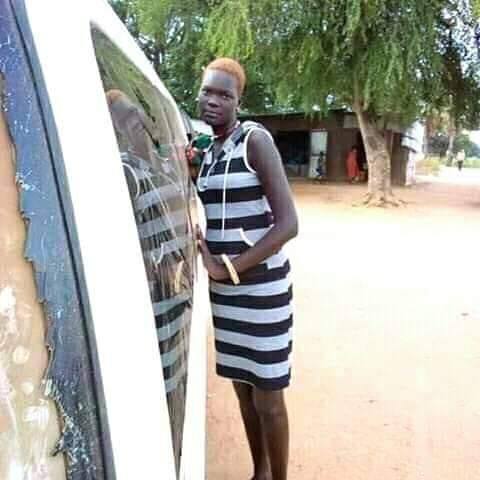
A story has been going viral on social media (particularly on Facebook) about the extravagant marriage of Nyalong Ngong Deng from Yirol.

I wrote about it in more detail in my very first article for Kukosha Media. I highlighted the issues around high dowry demands or offers; how that drives child marriage, cattle raiding and communal conflicts. The Western media also jumped on the news bandwagon, but they inaccurately reported that Nyalong’s ‘auction’ was taking place on Facebook, when in reality, it was just widely shared and discussed on the social media platform.

Of course I had been making a bit of noise about the marriage of Nyalong on both Twitter and Facebook. But what was striking was the male tears pouring out on social media against mine, and other women’s disapproval of the marriage. Critics of the marriage were called Westernised, educated, bitter, jealous, unmarried, over 30, short, ugly, bleached, unnatural, and the mother of all insults, slay queens. Besides the hurling of insults and other types of cyber bullying, there was also the age-old ‘it is our culture’ argument.

Walls of texts and essays about why Nyalong is getting married for 500 cows, and educated women are not, and why her marriage is acceptable, despite her being underage, had furnished my Facebook wall since the news broke in late October. I was inundated with abuse both in my inbox and publicly on social media, either directly or indirectly through statuses disparaging educated women and activists, who apparently are activists for self-gratification, and not the fact that real lives are affected by practices such as child marriage and dowry inflation.

Then there were the male allies, the ‘pick me’s’ women who said that Nyalong must become their husband’s second wife and that they will support the fight for her.

Of course, everyone is entitled to their opinion even if their opinion promotes archaic ideas. But no one is entitled to be abused for their opinion, which is something the critics of Nyalong’s marriage, particularly the women, have been subjected to.

This entire situation made me realise that even as a Dinka woman, some Dinka men genuinely believe that I should have no say over my culture. Some Dinka men also believe that any criticism I have towards some of our cultural practices, stems from my upbringing in Europe and my British education. The irony with this, is that there are men and women, who have not even been exposed to the West or Western education, who disagree with the concept of hundreds of cows being given as dowry, cars given as a form of dowry, and child marriage and lack of freedom of choice for the girl to choose her husband.

See also, the fallacy around the idea that I should be unable to say anything about a culture that I am from, and about a practice (dowry) that is required in order for me to get married. This practice, affects me and my husband to be.

Some Dinka men have really decided that they are the custodians of Dinka culture, therefore they must fight every kind opposition, even fellow Dinka women who continue to be disadvantaged by some of the cultural practices. There is a real sense of cultural ownership by the men, and I don’t even blame them for thinking so, because many practices that we carry out are quite patriarchal and usually in benefit of men.

There was also another layer of irony around the men who were fighting tooth and nail for Nyalong’s marriage, and that is the fact that they cannot afford the 350 or so cows that was ultimately paid for Nyalong.

The debate about Nyalong’s marriage is not just about women being treated as a commodity for her male relatives to sell for-profit, it’s the fact that many young men, who are earning an honest living, are struggling to get married due to this dowry inflation.

The criticism of the marriage of Nyalong, especially on my end, was not an attempt at building a campaign to discard a social practice that has benefited and strengthened ties between families for centuries, but that there are fundamental issues with Nyalong’s marriage, and many other similar marriages in South Sudan. These are issues of lack of freedom of choice in choosing a life partner, being married at an age at which you cannot consent (under 18), and the high dowry demands or offers (in a poverty-stricken country). I discuss these issues in more detail in my Kukosa Media article.

I suppose the hard line response of some men against the critics of the marriage, stems from the fact that they are either the products or beneficiaries of such marriages, i.e. they married a child or their mother was a child bride.

The self-appointed custodians of Dinka culture must realise, that the culture does not belong only to the men. They must also realise, that the abuse of existing cultural practices, is damaging. The impact of dowry and child marriage, and its effects on the socio-economical conditions of South Sudanese, are highly visible. The impact is a big pink elephant in the room, that just cannot be covered with a sheet called ‘it’s our culture.’

It is high time that we address the negative impact of some of our cultural practices, and not just constitutionally through the laws of the land, but also at the grassroots through our customary laws, elders and chiefs.

Nonetheless, the male tears that have poured since the news broke out, were plentiful to make a nice cup of tea with. And on that note, I want to close this topic (until next time).

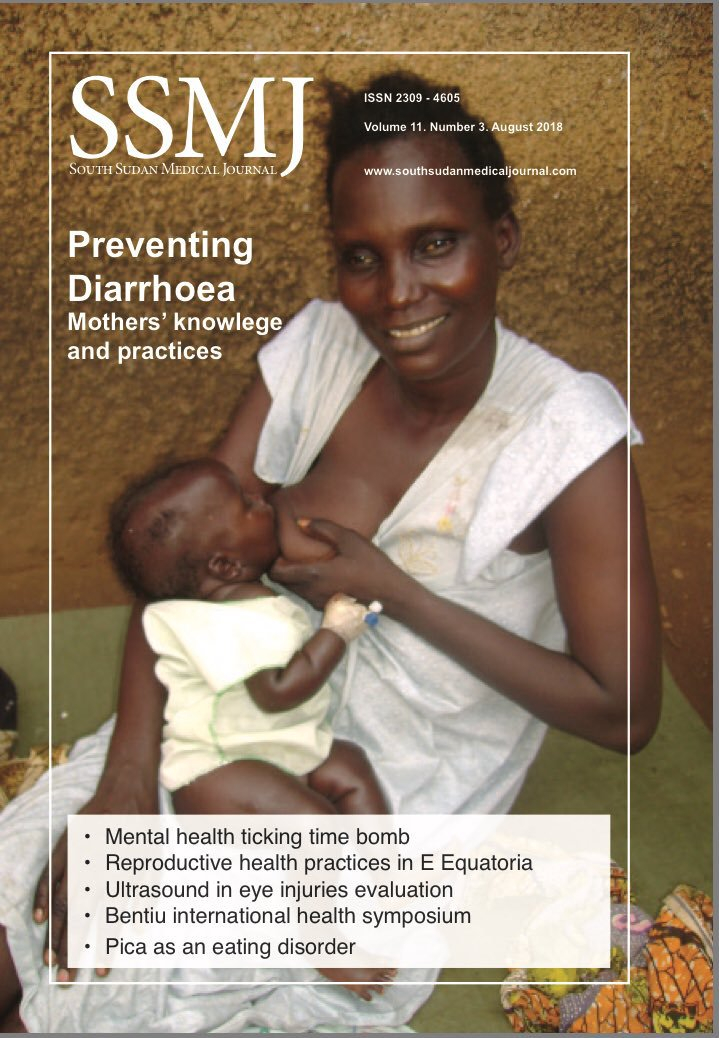
Mental health in South Sudan: a ticking time bomb

Last August I penned an editorial for the South Sudan Medical Journal, focusing on the urgency of mental health. In addition, I was also on Radio Miraya last month, and I discussed my journal article and the issue of mental health.

Mental health is a very neglected area of medicine, not just in South Sudan, but also in many countries in the West.

I have personally experienced depression, lost close relatives to suicide, and have friends and relatives who have had their own mental health battles.

Mental health afflictions are so common yet there’s a major stigma surrounding mental health. Mental health is often not discussed or taken seriously as a real medical condition. The more we discuss the issue, and the more there is invested in mental health resources, the more we lessen the stigma surrounding this health condition. It all starts with you and me – we have to be open to others and their experiences and we have to keep the conversation going.

The article is available for reading here.

SSMJ article